Over the past few months, I’ve noticed growing anxiety among creators around Instagram’s paid verification—the ₹650/month blue tick.
One fear keeps coming up:
“If I stop paying, will I lose my account, my followers, or my reach?”
Let’s address this clearly, based on how platforms actually work.
The fear is understandable—but largely misplaced
From what I’ve observed, this fear spreads through word-of-mouth. Not through any official platform behavior.
Not paying for verification is not, by itself, a reason for Instagram to delete your account. Or remove your followers. Or kill your reach.
Instagram’s incentive is simple: active creators mean active users. Active users mean more engagement.
Creators—especially ones making viral content—are valuable to that ecosystem. Penalizing them for skipping a subscription would work against Instagram’s own interests.
And viral reach was never Instagram’s gift to give. It comes from the network effect. Thousands of people liking, sharing, commenting, saving, reposting. The platform just amplifies what people already engage with.
This is where free users matter more than people realize.
Free users are more valuable than paid users
Millions of non-paying users are the ones actually creating that network effect. They need full freedom to like, share, and repost—without friction.
If the content they’ve liked or shared gets removed or locked behind verification, that breaks the experience. And a broken experience pushes users away.
Instagram knows this. Punishing free users’ engagement would hurt the very thing that makes the platform valuable in the first place.
This is the same logic I used when I wrote that Google Business Profile reviews and ratings are likely to remain free.
Reviews only work if millions of ordinary users can write and read them without paying. Lock that behind a subscription, and the reviews dry up. Without reviews, the platform loses its core value.
Same principle. Different platform.
The blue tick is not a protection shield
Here’s a common misconception: that verification offers immunity.
It doesn’t.
A paid badge doesn’t override community guidelines. It doesn’t override legal responsibilities either.
If your content violates platform policy, it can still be removed. Your account can still face restrictions, reduced reach, or enforcement action.
If your content creates legal trouble—defamation, say—the blue tick won’t shield you from that either.
So what is the blue tick actually for?
In practice, it’s a bundle of features and perceived credibility. For some users, that might mean:
- Authenticity signals
- Some account protection features
- Better brand perception and trust
- Extra platform tools, depending on region and rollout
But the real question isn’t “Is this important in general?” It’s:
“Is it valuable enough to me to justify the monthly cost?”
My takeaway
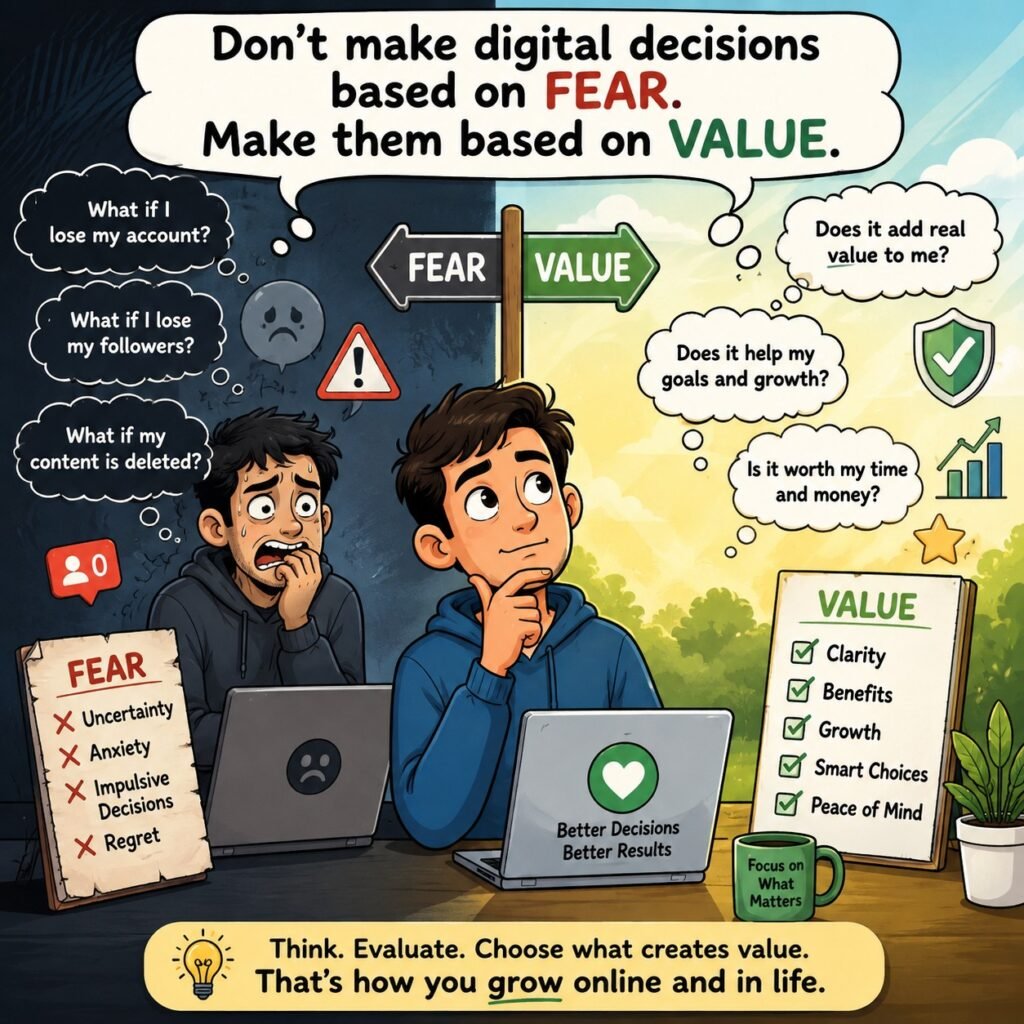
Here’s what I’ve noticed: many creators aren’t paying for features. They’re paying out of fear.
That’s the real issue.
If verification genuinely helps your work, your brand, your business—it’s worth it.
But if the only reason you’re paying is fear of punishment, that fear isn’t backed by how the platform actually works.
Final thought
A blue tick is a product. Not a protection guarantee.
I wouldn’t have survived over 2 decades in digital marketing if I didn’t know it.
Evaluate it like any subscription:
- Adds value? Keep it.
- Doesn’t? Opt out.
Don’t make digital decisions based on fear. Make them based on value.