
You have an idea. You build a website, set up a Google Business Profile, and start waiting for customers.
Then reality hits: there are already 50 businesses doing the same thing. Some have thousands of reviews. Some have been operating for years. Some are paying for Google Ads every single day.
Before you sink money into a new business, there’s a simple, free experiment you can run first.
Open Google Maps.
The Google Maps Competition Test
Search a high-intent local keyword tied to your business idea — the kind of phrase someone types when they’re ready to buy, not just browsing:
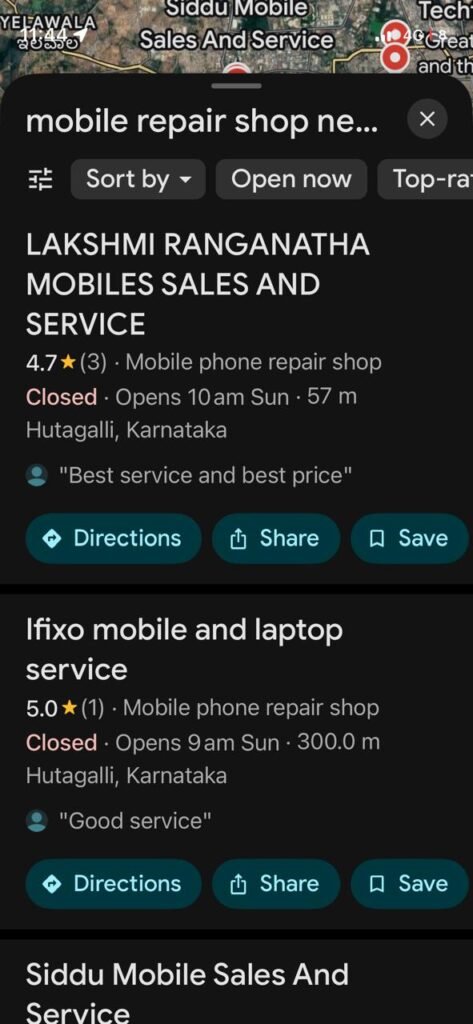
- “mobile repair shop near me”
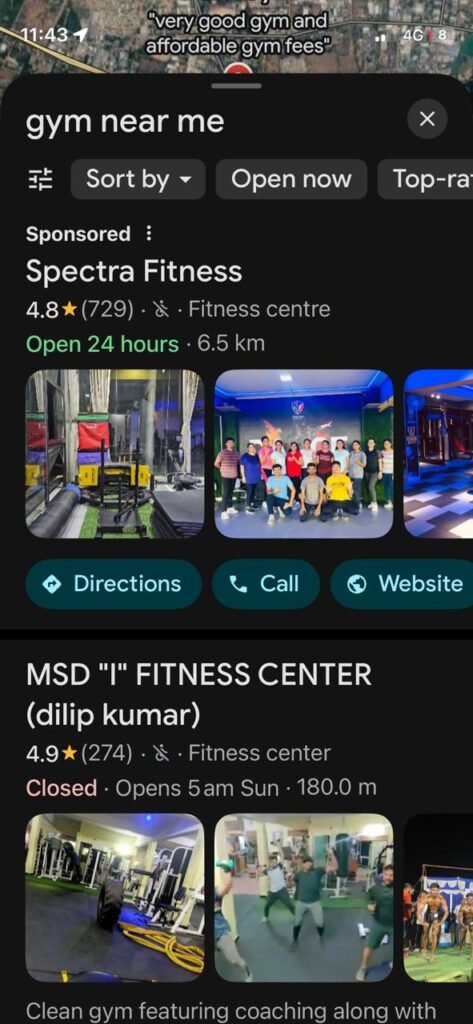
- “gym near me”
- “dentist near me”
- “digital marketing agency near me”
- “bakery near me”
Someone typing “near me” is usually close to making a decision. Now look at what shows up first — specifically, how many of the top results are marked Sponsored.
What the Sponsored Listings Are Telling You
| Sponsored listings | What it signals | What it means for you |
|---|---|---|
| Two or more | High competition, high commercial pressure | Businesses are paying to win this customer. You’d be competing with their ad budgets, review counts, and years of brand equity — not just their service. Proceed carefully. |
| One | Competitive, but not saturated | At least one business finds paid visibility worth the cost, but others may be winning through organic search, word of mouth, or repeat customers. There may be room to compete on positioning or service. |
| None | Worth investigating | Could mean low competition and an underserved niche — or it could mean low search volume and weak demand. Don’t celebrate yet; dig deeper. |
See It in Action
Here’s what the three scenarios actually look like on Google Maps:
Zero Sponsored listings — “mobile repair shop near me”
One Sponsored listing — “gym near me”
Two Sponsored listings — “dentist near me”
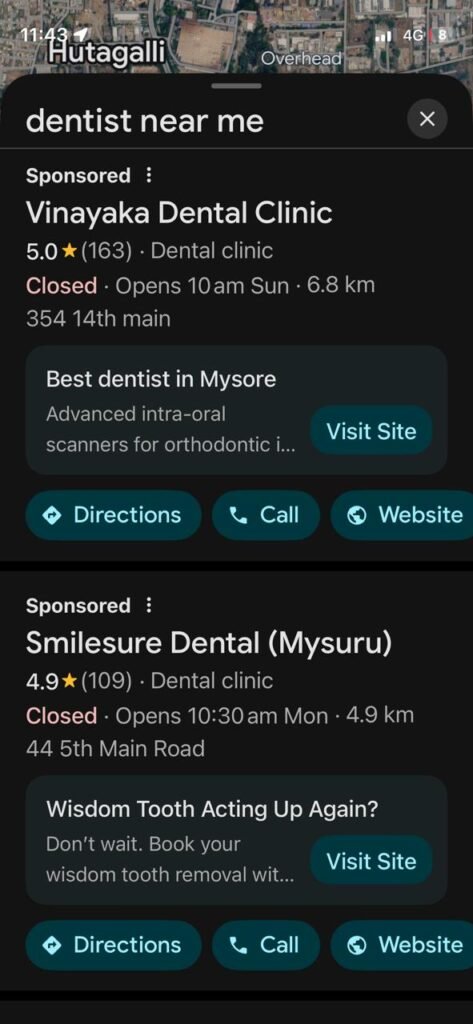
Important Note: These screenshots were taken in Mysuru around 11.30 PM when these shops/clinics were closed! Why Google map is showing closed business at midnight?
Two sponsored ads for “Dentist Near Me” can scare even a 20-Year Digital Marketing Veteran like me. Can I really help new NEET topper Dentist to settle & grow organically?
A word of caution on that last row: no ads doesn’t automatically mean an easy market. It might just mean nobody searches for this online, the margins don’t support advertising, or demand simply isn’t there. Treat the absence of ads as a prompt to investigate, not a green light.
This is the core idea worth remembering: a business doesn’t keep paying for ads indefinitely without expecting a return. Sustained ad spend is a signal that the customer is worth acquiring — which makes Sponsored listings a rough, free proxy for how valuable (and contested) a market is.
Six Things to Check While You’re There
Most business owners only open Google Maps after launching — usually to ask “why am I not ranking?” By then it’s too late to change course cheaply. Do this analysis before you commit to the lease, the inventory, or the ad spend.
- How many real competitors are there? Ten serious players is a very different market from two hundred.
- How strong are their reviews? Competing against businesses with 20 reviews is nothing like competing against ones with 5,000.
- Are they actively advertising? Sponsored listings mean someone is paying to acquire customers right now.
- How good are their websites? A saturated offline market sometimes has surprisingly weak digital presence — that gap can be your opening.
- Are the listings actually active? Maps often shows businesses that are outdated, inactive, or poorly maintained. Don’t count them as real competition.
- Is there a gap? Maybe every repair shop targets everyone, but nobody specializes in premium phones. Maybe every gym offers the identical experience. Competition rarely means there’s no room — it usually means you need a sharper angle.
The Question to Ask First
Most people ask, “Can I rank here?” That’s the wrong starting question.
Ask instead: “What am I actually getting into?”
Before you spend money on a shop, a website, inventory, staff, or ads, spend 30 minutes on this instead:
- Open Google Maps
- Search the terms your future customers would actually use
- Count the Sponsored listings
- Read the top competitors’ reviews
- Visit their websites and look for weaknesses
- Look for the gap nobody’s filling
Final Thought
Google Maps ads aren’t just ads — they’re free market intelligence. They won’t tell you everything about an opportunity, but they’ll give you an early read on how crowded the battlefield already is, before you’ve spent a rupee finding out the hard way.
The dentist market seems to be already highly competitive in Mysuru, however some highly reputed and established doctors don’t even have a website.
Search. Observe. Analyze. Then decide.