A decade of expensive lessons, 2,119 lines of code, and one uncomfortable truth about SEO, AI, and client expectations.
I’ve spent 22 years learning SEO the hard way. Algorithm updates that broke everything overnight. Clients who wanted a “quick redirect” that took a week to explain. The unglamorous discipline of noindexing the right pages and canonicalizing the wrong URLs before Google ever noticed the difference.
Yesterday, I built a full WYSIWYG admin dashboard with Claude in 24 hours. Media manager, menu editor, TinyMCE with real CSS rendering, server-enforced user permissions, auto-regenerating sitemaps, canonical tags that don’t duplicate themselves into ranking disasters, Open Graph fallbacks, and a locked-down robots.txt.
2,119 lines. One day. Zero developers in the loop.
A decade ago, I spent thousands dollars on a similar script. Still got buggy & excuses. Still needed endless developer hand-holding. Still shipped late with “this is not technically feasible or it doesn’t work like that sir!”
But here’s what the AI couldn’t do for me. And it’s the real lesson.
The Problem AI Can’t Solve
Every web developer, SEO consultant, and digital strategist knows this scenario by heart:
You sit down with a client—a surgeon, a real estate broker, a boutique law firm, a manufacturing company with 40 years of history. They want a website. They want to rank. They want to “dominate Google.”
So you ask the obvious questions:
- What are your core services?
- Who is your ideal client?
- What makes you different from every other [surgeon/lawyer/agent] in town?
- Can you share your exact credentials, certifications, case studies, and client testimonials?
And then… silence. Or worse, a Dropbox folder with three blurry photos and a PDF from 2014.
They assume you already know. Because you’re the expert, right?
So you fill the gaps with your best judgment. You research. You infer. You write compelling copy that sounds professional and covers all the bases.
You launch the site.
And the client calls, furious.
“This isn’t me.”
“I don’t practice in that area.”
“My certifications are different.”
“Where’s my fellowship, awards, recognition?”
“This bio makes me sound like a different person.”
The issue is simple and devastating: Nobody knows about you except you. Not your web developer. Not your SEO consultant. Not Google. Not ChatGPT. Not Claude.
And yet, clients consistently expect that we—and the algorithms we optimize for—will magically know their story better than they do.
The AI Paradox
Here’s where it gets interesting.
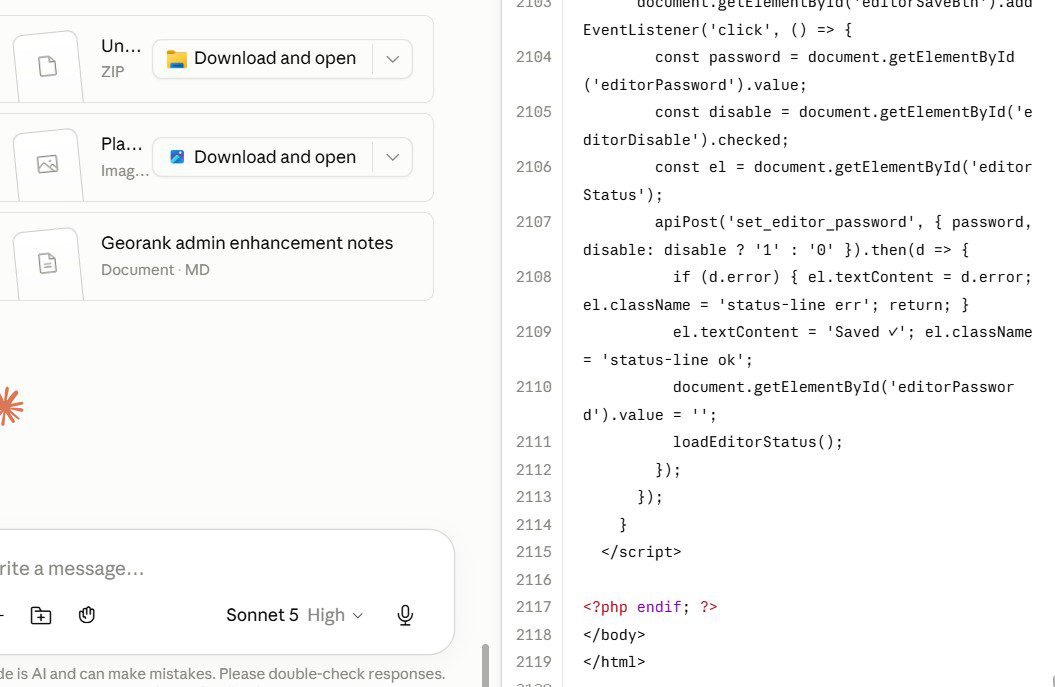
I just proved that AI can write production-grade code in hours, not months. It can build admin panels, generate sitemaps, enforce security rules, and handle edge cases that would take a junior developer a week to debug.
But AI cannot interview your client for you. It cannot extract decades of nuanced expertise from a brief email. It cannot interpret the unspoken context of a 20-year career.
AI is exceptional at transforming clear requirements into flawless execution. It is terrible at guessing what those requirements should be.
And that’s the gap that no amount of code can bridge.
The Only Solution: A Professional Portfolio Website
If you are an expert with a decade of experience—if you have certifications, case studies, publications, media appearances, a proprietary methodology, or a list of clients who will vouch for you—you need a professional portfolio website that you control.
Not a LinkedIn page.
Not a “Find a Doctor” directory.
Not a third-party profile that you can’t edit.
Not a social media account that could be suspended tomorrow.
Your own website. Your own domain. Your own story, told accurately, thoroughly, and permanently.
Here’s why:
1. You Are the Only Authority on You
Nobody else knows:
- The exact scope of your expertise
- The nuances of your certifications
- The specific outcomes you’ve delivered
- The philosophy that guides your work
- The clients you’ve helped and how
If you don’t document this yourself, it doesn’t exist online. Period.
2. AI and Search Engines Can Only Read What You Publish
Google doesn’t “know” anything about you. It indexes what’s written. AI models don’t “understand” your career. They process the text that’s publicly available.
If your website says you’re an “eye doctor” when you are actually an Ophthalmologist—guess what? Google thinks you’re a general vision doctor. Clients searching for Ophthalmologist won’t find you.
Garbage in, garbage out. Always has been. Always will be.
3. The “Imagination Gap” Is Costing You Business
Every piece of placeholder copy, every vague bio, every generic service description is a missed opportunity. When you leave gaps, developers and AI fill them with approximations. And approximations attract the wrong audience—or no audience at all.
Your exact words. Your specific credentials. Your unique value proposition. Nothing else works.
4. You Can’t Afford to Let Anyone Else Tell Your Story
I’ve seen it a hundred times: A brilliant surgeon with groundbreaking techniques, hidden behind a generic medical directory profile. A boutique investment advisor with a 15-year track record, buried under boilerplate “wealth management” copy. A family-owned manufacturing company with four generations of history, summarized in three bullet points.
Your reputation is too valuable to outsource to strangers and algorithms.
What a Professional Portfolio Website Actually Does
It’s not just a digital business card. It’s your canonical source of truth. It tells search engines—and more importantly, real humans—exactly who you are, what you do, and why they should choose you.
A well-built portfolio site:
- Documents your exact credentials so there’s no ambiguity
- Showcases case studies and outcomes that demonstrate your value
- Tells your unique story in your own voice
- Gives you control over how you’re perceived online
- Provides a single source of truth that search engines can trust
- Differentiates you from every other generic professional in your field
And from an SEO perspective, it’s the foundation of everything else. Accurate content, properly structured, with the right metadata, canonicals, and sitemaps—just like the dashboard I built.
Because if the content is wrong, no amount of technical SEO will fix it.
The Real Takeaway
My 2,119 lines of code fixed the gap between having SEO judgment and shipping it live.
But the bigger gap—the one that costs clients thousands in lost opportunities—is between what they know about themselves and what they actually publish.
AI can write your admin panel. It can generate your sitemap. It can enforce your noindex tags.
AI does not know your story.
Only you can do that. And if you don’t put it on your own website, accurately and completely, nobody else will—not your developer, not your SEO consultant, and certainly not a chatbot that’s never met you.
So yes, I spent 24 hours building something that used to take months and thousands of dollars.
But the real work—the work that actually moves the needle—is still the same as it was 22 years ago:
Know your story. Tell it clearly. Own it completely.
Everything else is just code.
Table of Contents
Choosing who builds your site matters as much as having one. See our top 10 web designing companies in Mysore, ordered by years in business.