
Imagine you are a bridal makeup artist.
It is the morning of the wedding. The muhurtham is approaching, the bride is waiting, and you are trying to follow a carefully planned schedule. Your responsibility is clear: prepare the bride on time and make sure she looks and feels her best.
Then the unexpected requests begin.
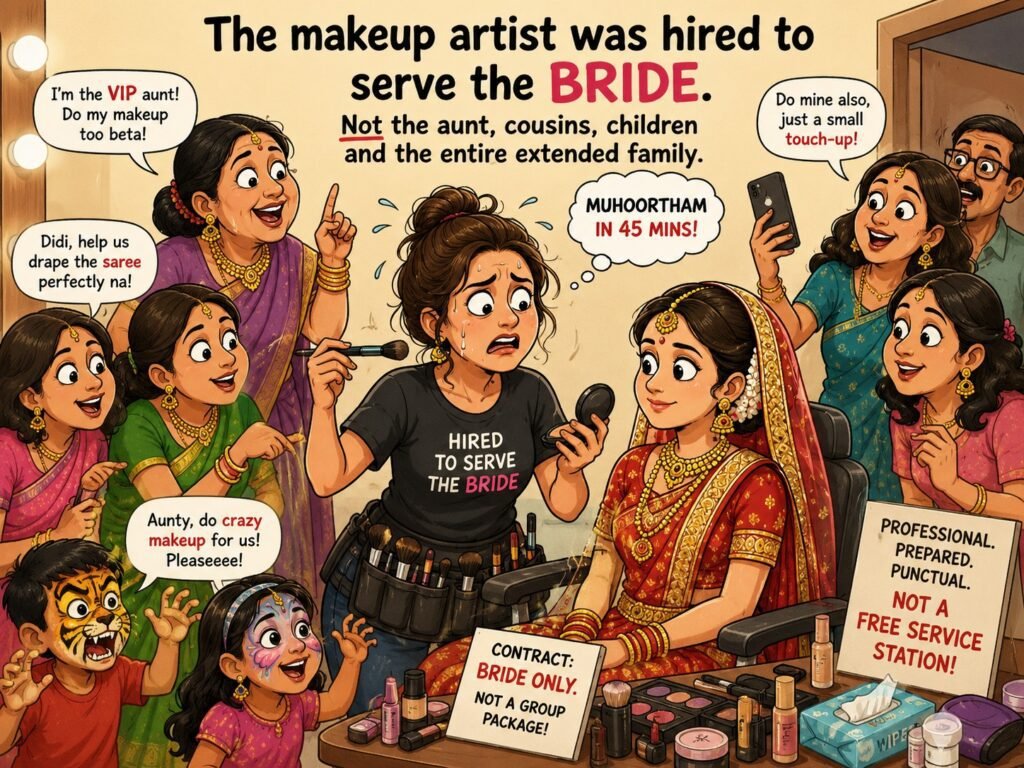
The bride’s VIP aunt suddenly wants makeup. A cousin needs urgent saree draping. Another family member asks for hairstyling. Someone brings the children, who now want funny or colourful makeup.
Everyone looks at the artist as though these are small, obvious favours.
But they are not.
The Bride Comes First
A bridal makeup artist is hired to serve the bride. The booking is not automatically for the aunt, cousins, children, and every other person attending the wedding.
The bride has paid for the artist’s time, attention, products, and expertise. She should not receive a rushed or delayed service because other people keep adding last-minute requests.
On a wedding morning, time is especially valuable. A few minutes spent on another person can affect the bride’s makeup, hairstyling, photographs, travel arrangements, or arrival at the ceremony.
The artist’s first responsibility is to protect the bride’s schedule.
An Extra Face Is Extra Work
People often say:
“It will only take five minutes.”
But an additional makeup service is never only about five minutes.
It may involve:
- Skin preparation.
- Choosing suitable products and shades.
- Sanitising tools.
- Applying and blending the makeup.
- Answering questions.
- Managing allergies or skin sensitivities.
- Cleaning and repacking products.
- Taking responsibility for the final result.
The same applies to saree draping, hairstyling, touch-ups, and children’s makeup. Each service requires time, concentration, skill, and responsibility.
A task does not become free simply because it looks quick or simple.
Last-Minute Requests Create Pressure
Wedding mornings already involve enough pressure. The artist may be managing a strict timeline, limited space, several products, and a bride who needs calm and focused attention.
When relatives make unplanned requests, the artist is placed in an uncomfortable position. Saying no may make her appear unhelpful, but saying yes may put the bride’s appointment at risk.
This is unfair.
The artist should not have to choose between protecting the bride’s service and avoiding someone else’s disappointment.
A Favour Is Not an Entitlement
There is nothing wrong with a makeup artist helping a family member for free. She may choose to do so as a gift or a gesture of goodwill.
But there is an important difference between a favour and an expectation.
A favour is voluntary. An expectation is imposed by someone else.
If the artist has extra time and wants to help the bride’s aunt or cousin, that is her choice. But relatives should not assume that free makeup, saree draping, hairstyling, or children’s makeup is automatically included in the bridal package.
Kindness should be appreciated—not treated as an obligation.
Free Services Can Affect the Bride
Unplanned extra services can create several problems:
- The bride may be delayed.
- The artist may have to rush the bride’s final look.
- The agreed schedule may collapse.
- Additional products may be used without compensation.
- The artist may become physically and mentally exhausted.
- The bride may feel that her appointment is no longer receiving full attention.
- Other guests may begin asking for the same treatment.
What begins as one small favour can quickly become several unpaid services.
More importantly, the bride may be the person who suffers the consequences.
Set Clear Boundaries Before the Wedding
The best way to avoid confusion is to discuss everything in advance.
A bridal makeup artist should clearly mention:
- Who is included in the booking.
- Which services are included.
- How many hours are reserved.
- The price for additional people.
- Whether additional services depend on availability.
- Whether an assistant is required for a larger group.
- The latest time at which extra services can be added.
A simple clause can prevent many uncomfortable conversations:
“The bridal package is reserved for the bride only. Additional makeup, hairstyling, saree draping, or children’s makeup will be charged separately and can be provided only if time and availability permit.”
Clear terms are not unfriendly. They protect the bride, the artist, and the entire wedding schedule.
How to Respond Politely
The artist does not need to sound rude or apologetic when setting a boundary. She can say:
“My booking today is for the bride, and I need to keep her on schedule. I can take an additional booking only if I have enough time.”
Or:
“I’m happy to check whether this is possible, but it will be an additional service and may not be available this close to the ceremony.”
If there is no time, a simple response is enough:
“I’m sorry, but I cannot take another person right now because it may delay the bride.”
The artist can also recommend another makeup artist, hairstylist, or saree draper when possible. Referring someone else is not refusing to help; it is helping without compromising the bride’s appointment.
Payment Is About Respect
Charging for additional work does not make a makeup artist selfish.
Payment recognises:
- Her training and experience.
- The time reserved for the service.
- The products and equipment used.
- The physical effort involved.
- The responsibility of achieving a satisfactory result.
- The opportunity cost of serving another person.
The artist may decide to offer a discount or a complimentary service. But that should be a deliberate decision made by the artist—not an assumption made by relatives.
Final Thought
A bridal makeup artist is hired for the bride.
If she has extra time and genuinely wants to help someone else, that can be a generous gesture. But a VIP aunt, a cousin with a last-minute request, or a child asking for funny makeup does not automatically expand the booking.
On a wedding morning, protecting the bride’s time is not selfish. It is professional responsibility.
The bride comes first. Every additional service must be discussed, agreed upon, and available—not assumed.
Table of Contents
Also Read>>